
Kharga Oasis, Egypt: Where Ancient Temples Meet the Silence of the Western Desert
There is a moment on the road to Kharga Oasis when the landscape changes completely.
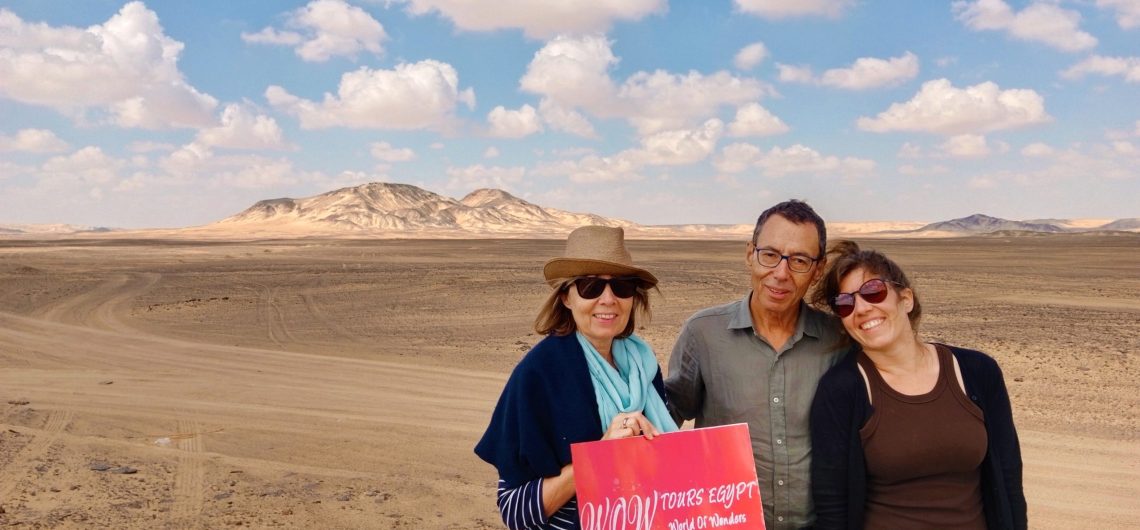
The green fields of the Nile Valley disappear behind you. Villages become fewer. The horizon opens. Golden desert stretches in every direction, broken only by distant hills, palms, and the occasional glimpse of an ancient monument.
And then Kharga appears.
An oasis of palms and cultivated land in the middle of Egypt’s Western Desert, Kharga is far more than a place to stop between Luxor and Dakhla. For thousands of years, it was an important crossroads connecting the Nile Valley with the great desert routes leading west and south.
Along those routes came travelers, merchants, soldiers, priests, and pilgrims. They left behind temples, settlements, forts, water systems, and cemeteries that reveal a fascinating story of ancient Egypt and the civilizations that followed.
For travelers willing to go beyond Egypt’s famous Nile Valley monuments, Kharga Oasis offers a completely different side of Egypt — quieter, more remote, and wonderfully atmospheric.
Where Is Kharga Oasis?
Kharga Oasis lies in Egypt’s Western Desert and is the largest of the major oases of the New Valley.
Its location helped make it important long before modern roads existed. Kharga stood along ancient desert routes connecting the Nile Valley with destinations farther into the Western Desert and beyond.
Water was the key.
In an environment where water is precious, an oasis could transform an otherwise difficult desert journey into a possible one. Wells, underground water channels, agricultural land, and palm groves allowed communities to develop and travelers to rest.
That is why Kharga became much more than an isolated settlement.
It became a desert crossroads.
Today, when you travel through the oasis, you are following landscapes that have witnessed thousands of years of movement, trade, religion, and cultural exchange.
Why Is Kharga Oasis Important?
Kharga tells a story that stretches across many periods of Egyptian history.
Its archaeological remains reflect the Late Period, Persian rule, the Ptolemaic period, Roman Egypt, and the emergence and development of Christianity.
What makes Kharga particularly fascinating is the way these different chapters overlap.
Ancient Egyptian religious traditions continued while new rulers arrived. Roman administration transformed parts of the oasis. Later, Christian communities created their own places of worship and burial.
Instead of seeing Egyptian history as a series of separate periods, Kharga allows you to see how cultures changed, adapted, and continued.
And there is another part of the experience that makes Kharga special.
The landscape itself.
Ancient monuments stand against vast desert horizons, while palms and cultivated fields appear wherever underground water reaches the surface.
It is an extraordinary contrast.
Hibis Temple: An Ancient Temple in the Desert
If there is one monument that deserves to be at the heart of a Kharga Oasis visit, it is Hibis Temple.
Located near modern Kharga, Hibis is one of the most important surviving temples in the oasis.
Its history is particularly interesting because the monument reflects several periods of Egyptian history. The temple dates largely to the Persian period, while later rulers made additions and modifications.
The temple was dedicated to Amun, one of ancient Egypt’s most important gods.
But what makes visiting Hibis so memorable is not only its history.
It is the setting.
Imagine approaching an ancient Egyptian temple with the Western Desert stretching behind it. There is no enormous modern city surrounding the monument. Instead, the temple rises from a landscape of sand, palms, and open sky.
The experience is very different from visiting the crowded monuments of Cairo or Luxor.
Here, the desert becomes part of the monument.
Inside the temple, the reliefs and inscriptions tell stories of Egyptian religion and royal power, while the surrounding landscape reminds you why this oasis mattered in the first place.
Hibis is not simply an ancient temple standing in Kharga.
It is evidence that this seemingly remote corner of Egypt was once deeply connected to the wider world.
Bagawat Cemetery: A City of Domes in the Desert
Then comes one of the most unusual archaeological experiences in Kharga.
Bagawat Cemetery.
From a distance, the site can look almost like a small abandoned village.
Hundreds of small mud-brick structures rise from the desert, many with distinctive domed roofs.
But these are not houses.
They are funerary chapels.
Bagawat is one of the oldest and most important Christian cemeteries in Egypt, with hundreds of mud-brick funerary structures spread across the desert.
Walking among them feels completely different from visiting the great stone temples of ancient Egypt.
The architecture is simple.
The atmosphere is quiet.
And the stories preserved inside some of the chapels are remarkable.
Bagawat shows us another chapter in Egypt’s long religious history — the emergence and development of Christianity in the country.
The Chapel of the Exodus
One of Bagawat’s most memorable structures is known as the Chapel of the Exodus.
Inside, painted scenes illustrate stories from the Old Testament, including the Exodus of the Israelites.
Other biblical stories are represented as well, including scenes connected with Adam and Eve, Noah, Daniel, and Jonah.
Imagine stepping inside a small mud-brick chapel in the middle of the Western Desert and looking upward to see religious paintings created many centuries ago.
This is one of those experiences that photographs can never completely capture.
The size of the chapel is modest, but the historical significance is enormous.
Here, ancient Christian communities left behind a visual record of their faith, surrounded by the same desert landscape that had connected people and cultures for centuries.
The Chapel of Peace and Early Christian Art
Another important structure at Bagawat is the Chapel of Peace.
Its decoration provides another fascinating window into early Christian art in Egypt.
Inside, visitors can see biblical and Christian imagery alongside decorative elements such as vines, birds, symbolic figures, and inscriptions.
The artwork reflects a world in which Christianity was becoming an increasingly important part of Egyptian society.
For anyone interested in Egypt’s Christian heritage, Bagawat offers something particularly valuable.
It allows you to experience this history in its original desert setting rather than only seeing it inside a museum.
Kharga Was Once a Desert Crossroads
One of the easiest mistakes to make when looking at Kharga today is to think:
How could a place this remote ever have been important?
The answer is water.
The oasis had access to groundwater, and ancient communities developed sophisticated ways of bringing that water to the surface and distributing it for agriculture and settlement.
These systems helped make long-distance travel through the desert possible.
Imagine an ancient caravan leaving the Nile Valley.
Ahead was a huge expanse of desert.
There were no paved highways, petrol stations, hotels, or modern navigation systems.
Finding water could mean the difference between continuing the journey and not surviving it.
Kharga provided that essential resource.
Caravans could stop, replenish their supplies, rest, and continue.
This explains why archaeological remains in and around the oasis include not only temples and cemeteries but also settlements, forts, agricultural areas, and water systems.
Kharga was not simply somewhere people lived.
It was part of the infrastructure that connected different parts of the ancient world.
Qasr Al-Ghweita: A Temple Surrounded by Desert
Another remarkable monument in Kharga is Qasr Al-Ghweita.
The temple dates to the Persian period, with later additions, and was dedicated to the Theban triad of Amun, Mut, and Khonsu.
Its location creates one of the most atmospheric experiences in the oasis.
Rather than being surrounded by modern buildings, the ancient temple stands within the vast Western Desert landscape.
The combination of architecture and scenery is unforgettable.
Stone walls that once belonged to a functioning religious complex now stand beneath an enormous desert sky.
For photographers, this is particularly rewarding.
For history lovers, it is a chance to see another monument connected with the religious life of ancient Egypt beyond the Nile Valley.
And for travelers simply looking for something different, it is another reminder that Egypt’s archaeological treasures extend far beyond the Pyramids and the temples of Luxor.
Qasr Al-Zayan and Roman Kharga
Kharga’s story continues into the Greco-Roman period at Qasr Al-Zayan.
The temple was dedicated to Amun and reflects the continuing religious importance of the oasis during the Roman era.
Visiting Qasr Al-Zayan helps complete the historical picture.
Kharga was not important for only one generation or one dynasty.
Its importance continued because its geography continued to matter.
The desert routes remained valuable.
The water remained essential.
And the oasis continued to support communities, agriculture, religion, and travel.
This continuity is one of the most interesting aspects of exploring Kharga.
Kharga Oasis Is About More Than Ancient Ruins
The archaeology is extraordinary, but the oasis itself is part of the experience.
Palm groves appear against golden desert.
Cultivated land survives because of underground water.
Small communities continue to live within this remarkable environment.
The contrast is beautiful:
green palms against an almost endless desert.
This is one of the reasons Kharga works so well for travelers who want to experience a different Egypt after visiting Cairo, Luxor, or Aswan.
The rhythm is slower.
The landscape is bigger.
And the silence becomes part of the journey.
Sometimes the most memorable moment is not standing inside a monument.
It is standing outside one, looking across the desert, and realizing just how far you are from the busy Nile Valley.
When Is the Best Time to Visit Kharga Oasis?
For most travelers, the cooler months from October through April are the most comfortable time to explore Egypt’s Western Desert.
The weather makes long drives and archaeological sightseeing much more enjoyable, particularly because the attractions around Kharga are spread across a large area.
The summer months can be extremely hot, so travelers visiting during this period should plan their sightseeing carefully and allow plenty of time for water, shade, and rest.
Comfortable walking shoes, sunglasses, sunscreen, and a hat are also useful for exploring the archaeological sites.
How Do You Get to Kharga Oasis?
Kharga is best experienced as part of a longer Western Desert journey rather than as a quick excursion.
One of the most rewarding routes is traveling from Luxor to Kharga and then onward to Dakhla Oasis.
This allows travelers to experience the transition from the Nile Valley into the Western Desert while visiting some of the region’s most important archaeological sites along the way.
A private journey also gives you greater flexibility.
The roads are long, the sites are spread out, and there is a lot to understand along the way.
Having a knowledgeable Egyptologist with you transforms the experience from simply seeing ancient buildings into understanding why they were built, who used them, and how they fit into the much larger history of Egypt.
For travelers considering this route, explore our Dakhla Oasis and Kharga Oasis tour from Luxor as part of your planning.
Kharga and Dakhla: Why Visit Both?
If you have enough time, combining Kharga and Dakhla Oases is much more rewarding than experiencing Kharga alone.
Kharga offers:
- Hibis Temple
- Bagawat Cemetery
- Qasr Al-Ghweita
- Qasr Al-Zayan
- Ancient desert-route heritage
- Roman and Christian history
- Oasis landscapes and palm groves
Dakhla adds another fascinating layer, with historic Islamic architecture, ancient Roman temples, Christian sites, traditional villages, and the remarkable old settlement of Al-Qasr.
Together, the two oases create a journey through ancient Egyptian, Persian, Greco-Roman, Christian, Islamic, and living oasis heritage.
That is an extraordinary amount of history concentrated within one journey through Egypt’s Western Desert.
For travelers who have already experienced Cairo and Luxor and want to discover a less familiar side of Egypt, this combination can be one of the most rewarding additions to an Egyptian itinerary.
Is Kharga Oasis Worth Visiting?
Absolutely — but it is not for everyone.
If your idea of an Egyptian holiday is limited to the Pyramids, the Nile Cruise, and the major temples of Luxor, Kharga may initially seem too far away.
But if you want to see the Egypt beyond the famous Egypt, it is one of the country’s most fascinating destinations.
Kharga is for travelers who enjoy:
- Archaeology.
- Desert landscapes.
- Ancient routes.
- Christian heritage.
- Oasis life.
- Adventure.
- And places that still feel wonderfully different.
It is for the traveler who wants to return home with stories and photographs that look unlike the standard Egyptian holiday.
And perhaps most importantly, Kharga helps us understand that ancient Egypt was not only a civilization of the Nile.
There was another Egypt beyond the river.
An Egypt of caravans, wells, temples, forts, palms, mud-brick settlements, and endless desert.
Kharga is where that Egypt comes into focus.
A Final Thought: Look Beyond the Pyramids
Egypt has some of the most famous monuments on Earth.
But sometimes the most memorable places are the ones that require a little more effort to reach.
At Bagawat, you can walk among ancient mud-brick funerary chapels.
At Hibis, you can study temple reliefs beneath a desert sky.
At Ghweita and Qasr Al-Zayan, you can see how religious life continued through changing political eras.
And between the monuments, you can simply look across the palms and desert and realize how extraordinary it is that people have built lives here for thousands of years.
Kharga Oasis isn’t just somewhere you visit.
It is somewhere you discover.
And once you have seen this side of Egypt, the map of the country suddenly feels much larger.
Discover Kharga Oasis with WOW TOURS EGYPT
If Kharga has caught your imagination, the




 Historical Background